| T O P I C R E V I E W |
| Xavier |
Posted - 02/09/2026 : 15:04:12
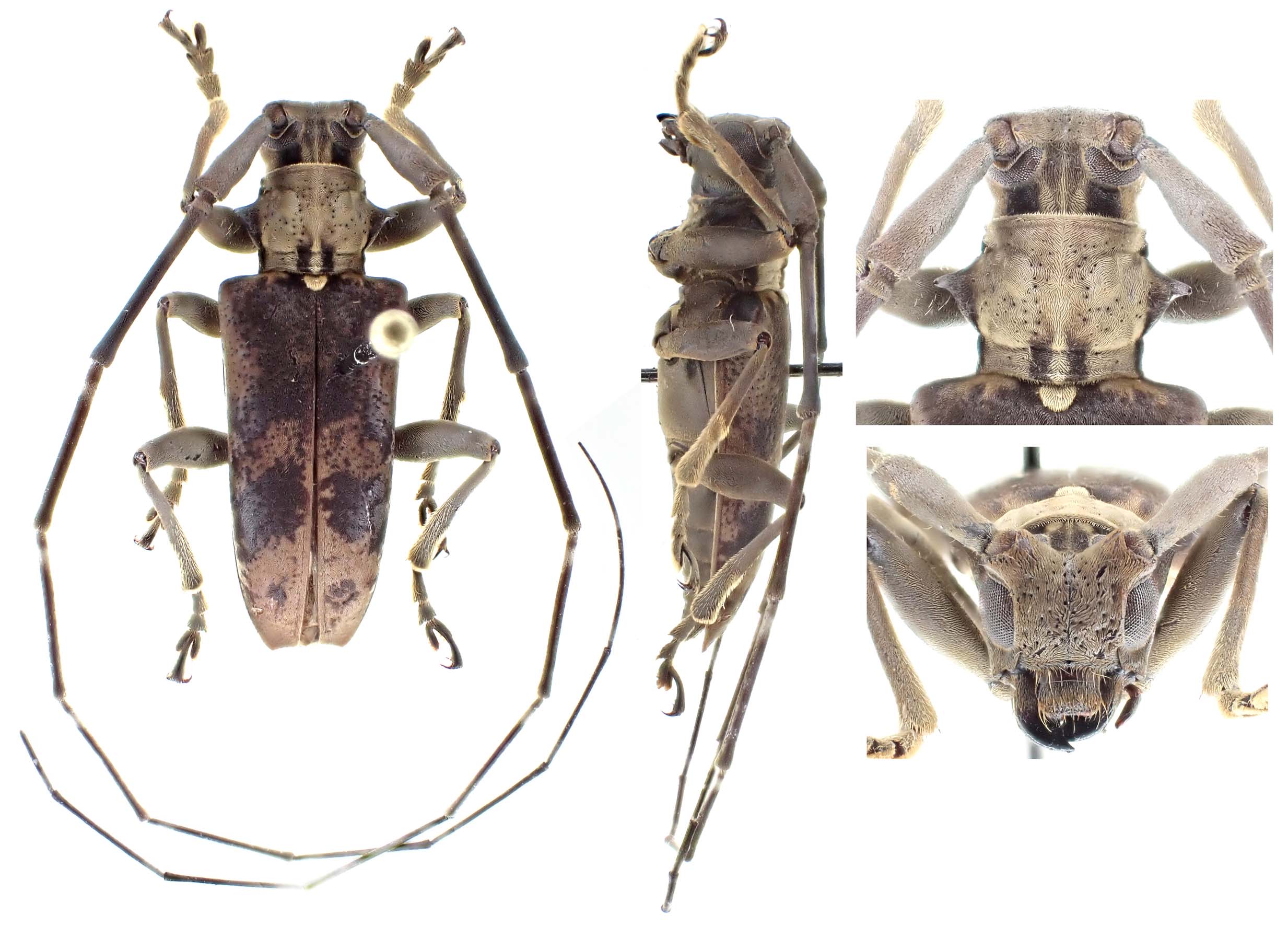
333.1 KB
17 mm, male. Philippines, Luzon(north).
With a punctate forehead and pronotum, pronotum with 2 short black stripes, and elytra mottled with black spots and obliquely truncated at the apex, this species does not correspond to any of the 16 known species of Acalolepta from the Philippines. What do you think, Francesco? |
| 4 L A T E S T R E P L I E S (Newest First) |
| Xavier |
Posted - 03/09/2026 : 13:12:47
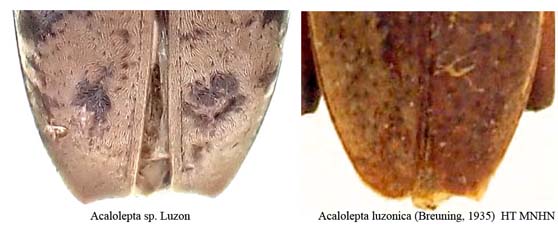
46.21 KB |
| Xavier |
Posted - 02/09/2026 : 22:09:02
Bonjour Gérard.
Très proche de Acalolepta (Dihammus) fuscosericea (Schwarzer, 1931) (voir ici), mais la ponctuation de la tête et du pronotum est différente.
Dans sa description (1935), Breuning indique que Acalolepta luzonica a les élytres "régulièrement arrondis au sommet", comme le confirme ta photographie du type au MNHN. |
| Gerard |
Posted - 02/09/2026 : 21:45:48
bonjour c'est Acalolepta (Acalolepta) luzonica Breuning, 1935 |
| Xavier |
Posted - 02/09/2026 : 15:28:09
The only possible species appears to be Acalolepta (Dihammus) fuscosericea (Schwarzer, 1931), which has a punctate forehead. However, the description of Acalolepta paravariolaris Breuning, 1980 – which is a synonym of Acalolepta (Dihammus) fuscosericea – indicates that this species has an unpunctuated forehead. I don’t know who established the synonymy. Are these two species really synonyms?
(I am preparing a female of Acalolepta (Dihammus) fuscosericea from Northern Luzon for comparison.) |
|
|