| Author |
 Topic Topic  |
|
|
FraRug
Member Purpuricenus

Italy
211 Posts |
 Posted - 11/01/2025 : 17:54:10 Posted - 11/01/2025 : 17:54:10


|
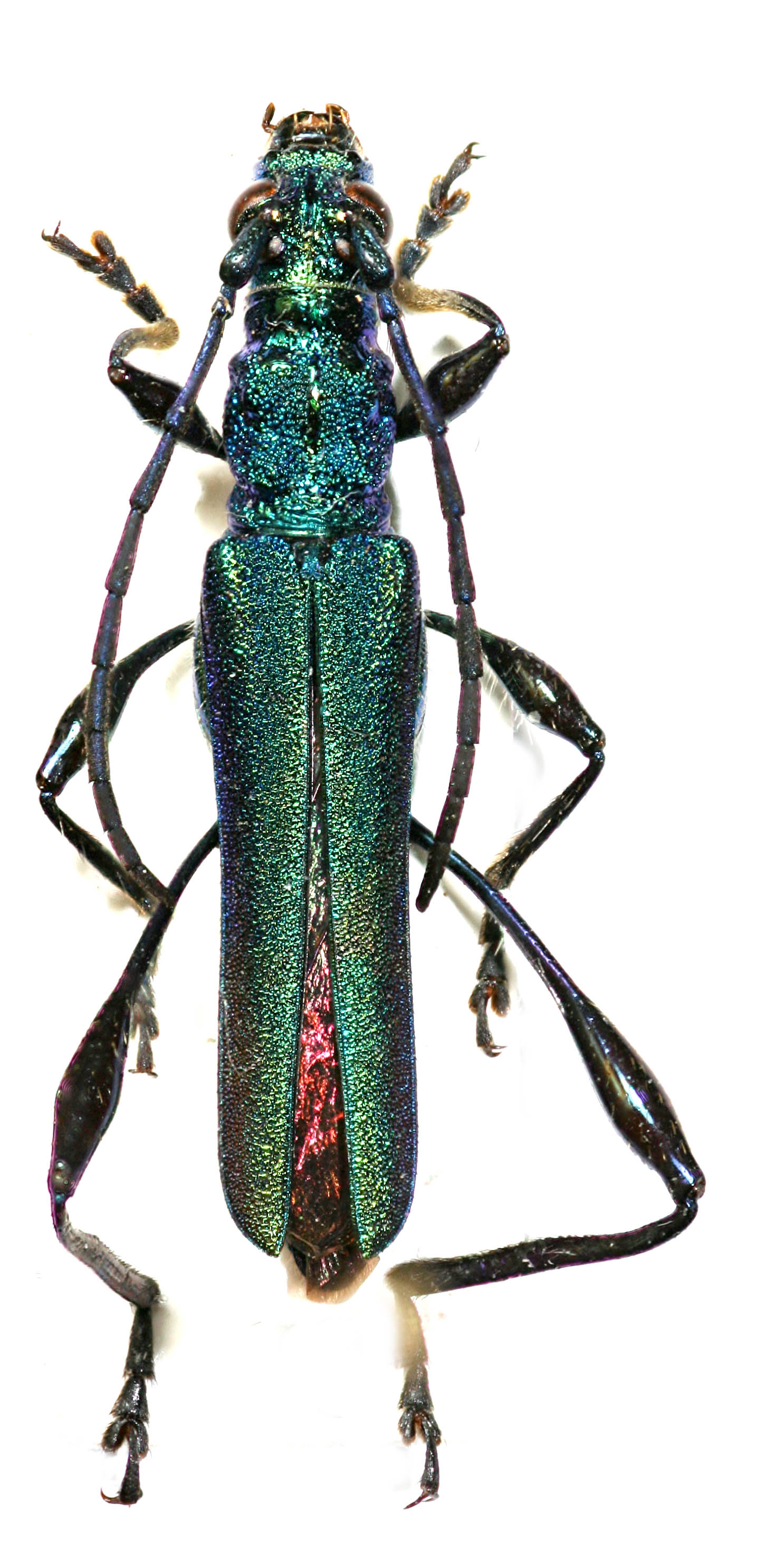 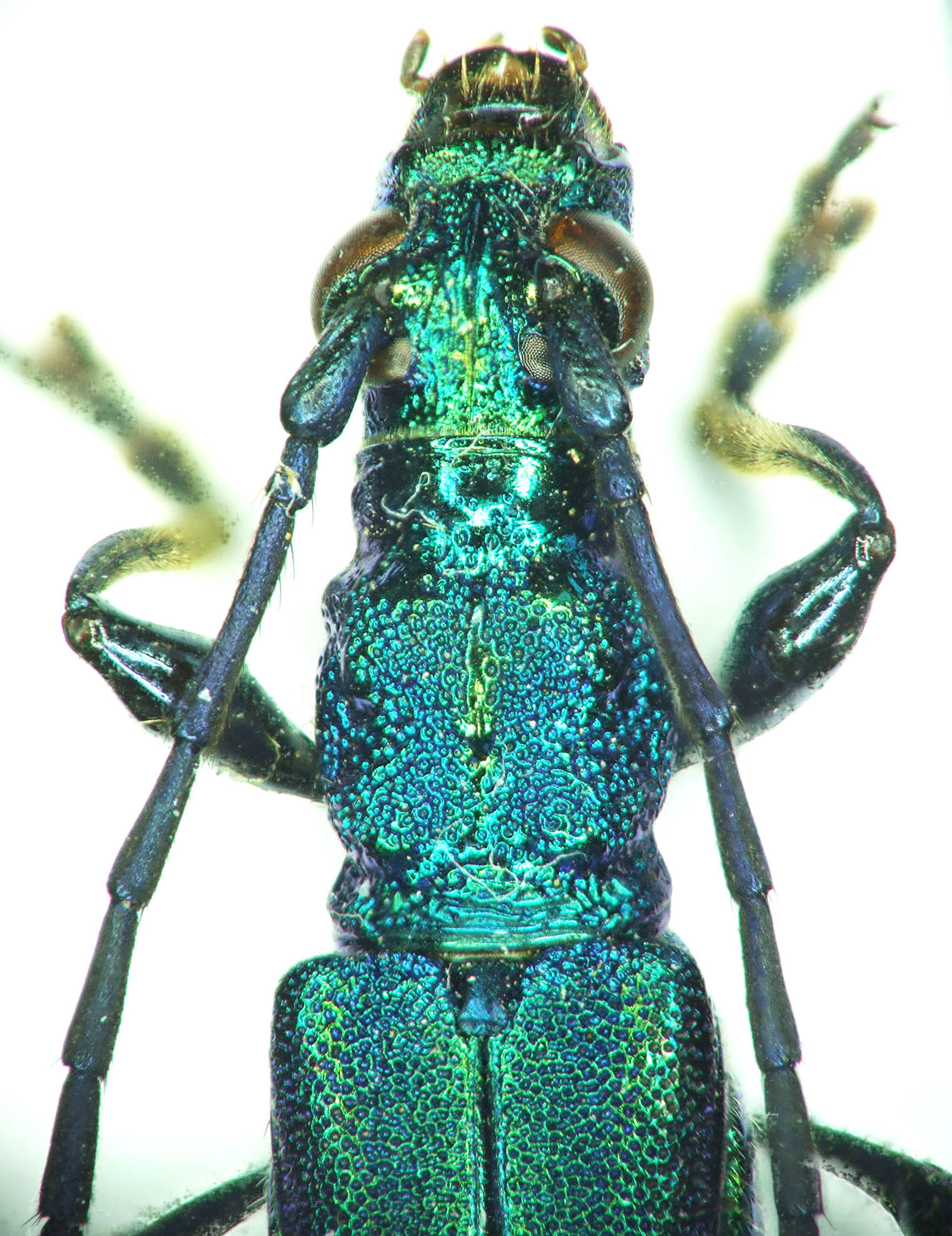
Sabah, Borneo. 15 mm.
Among the species entirely metallic-green and with a glabrous scutellum of the same nature, the only two species seem to be A. nayani Holzschuh, 2006 and A. perfida Holzschuh, 2007.
But the second one is to be excluded due to the length of the antennae and both lack the lateral pronotal callosity before the anterior transverse sulcus... |
|
|
FraRug
Member Purpuricenus
Italy
211 Posts |
Posted - 07/01/2026 : 16:00:19
|
| The specimen in the photo is now the holotype of Artimpaza trusmadiana Ruggiero, 2025 |
Edited by - FraRug on 07/01/2026 16:00:38 |
 |
|
|
Xaurus
Member Rosenbergia

Germany
1998 Posts |
Posted - 10/01/2026 : 00:42:08
|
Gratulation, unfortunately you have described the female of A. nayani  |
|
|
|
FraRug
Member Purpuricenus
Italy
211 Posts |
Posted - 10/01/2026 : 09:35:56
|
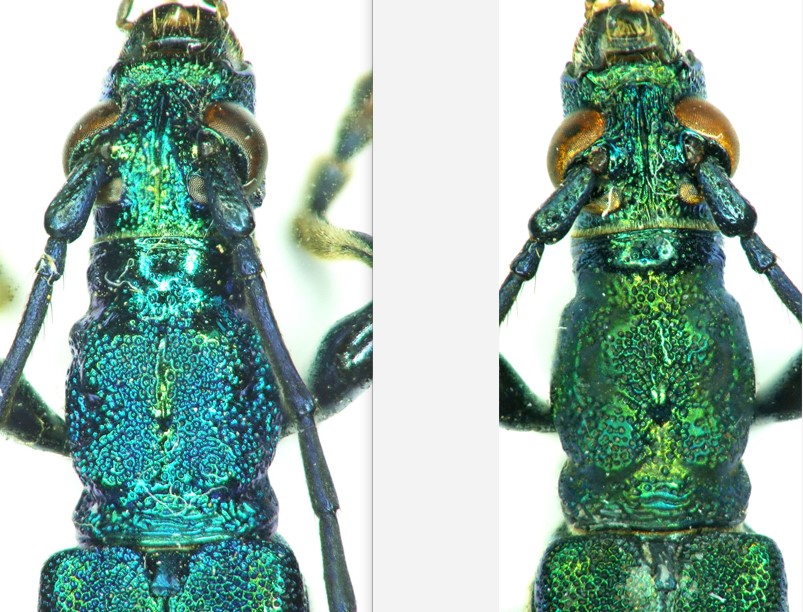
There is no doubt that there is a similarity, however, comparing the pronotum and scutellum [trusmadiana (left) and nayani (right)] seems to reveal significant differences...
I have several nayani, and in all specimens, the anterolateral callosities of the pronotum are absent.
169.12 KB

119.81 KB |
|
|
|
Robert
Member Rosenbergia
Canada
1335 Posts |
Posted - 12/01/2026 : 02:18:40
|
| The 3 nayani paratypes I have are all lacking the anterolateral callosities of the pronotum, and the scutellum is not as wide as in trusmadiana. |
Robert V. |
|
|
|
dryobius
Member Rosenbergia
USA
1909 Posts |
Posted - 13/01/2026 : 23:17:29
|
| The type locality of both species is Mt. Trus-Madi. A. nayani was described from about 65 specimens, from not only the type locality but several other locations as well. Sometimes when I have a long series, I see variations that are profound. I have specimens that are greenish and blue-greenish, like in the above photos. from 4 PT's which I have mounted, I also see that the punctation on the pronotum has some variability and the width of the scutellum does seem to vary a little. For me, A. trusmadiana requires additional morphological distinction. [ I'd be the first to admit that some of the species Santos-Silva and I described are also difficult to separate ] |
|
|
| |
Topic |
|




 Borneo: Artimpaza

